
Corporate event planning turns an organisational brief into a programme, budget and operating plan. It includes decisions about the audience, venue, content, suppliers and follow-up. This guide explains those responsibilities.
Table of Contents
- Defining Corporate Event Planning Today
- Major Types of Corporate Events Explained
- Key Elements of the Planning Process
- Essential Roles and Responsibilities Involved
- Critical Success Factors and Common Pitfalls
Key Takeaways
| Strategic Focus | Details |
|---|---|
| Evolved Purpose | Corporate event planning is now a strategic tool aimed at achieving specific business objectives through curated experiences. |
| Hybrid Engagement | Modern events blend in-person and virtual formats to enhance accessibility and audience reach. |
| Multidisciplinary Approach | Successful planning requires a combination of technical skills, creative design, and strategic communication. |
| Key Success Factors | Critical elements include clear objectives, audience-centric design, and effective risk management to ensure impactful outcomes. |
Defining Corporate Event Planning Today
Corporate event planning has transformed into a sophisticated strategic discipline that goes far beyond traditional conference coordination. Modern event planning now represents a critical business communication and engagement tool, designed to achieve specific organizational objectives through carefully crafted experiences. According to IMARC Group, these events range from conferences and seminars to product launches, each strategically engineered to drive business results.
Today’s corporate event landscape is dramatically different from previous decades, characterized by technological integration and hybrid engagement models. Event Guru Software highlights that contemporary event planning emphasizes flexible formats that blend in-person and virtual experiences, enabling companies to maximize audience reach while reducing logistical complexities. This evolution allows organizations to create more inclusive, accessible events that transcend traditional geographical and physical limitations.
The core objectives of corporate event planning now encompass multiple strategic dimensions:
- Brand Communication: Crafting immersive experiences that communicate corporate values
- Audience Engagement: Creating interactive platforms for networking and knowledge exchange
- Business Development: Generating potential leads and strengthening professional relationships
- Knowledge Sharing: Facilitating learning and professional development opportunities
Successful modern corporate event planning requires a multidisciplinary approach that integrates technology, creative design, strategic communication, and precise logistical management. Professionals in this field must now possess a diverse skill set, combining technical proficiency with creative vision and deep understanding of organizational communication dynamics. With the ongoing digital transformation, corporate event planners are no longer just coordinators but strategic partners driving organizational engagement and communication objectives.
Major Types of Corporate Events Explained
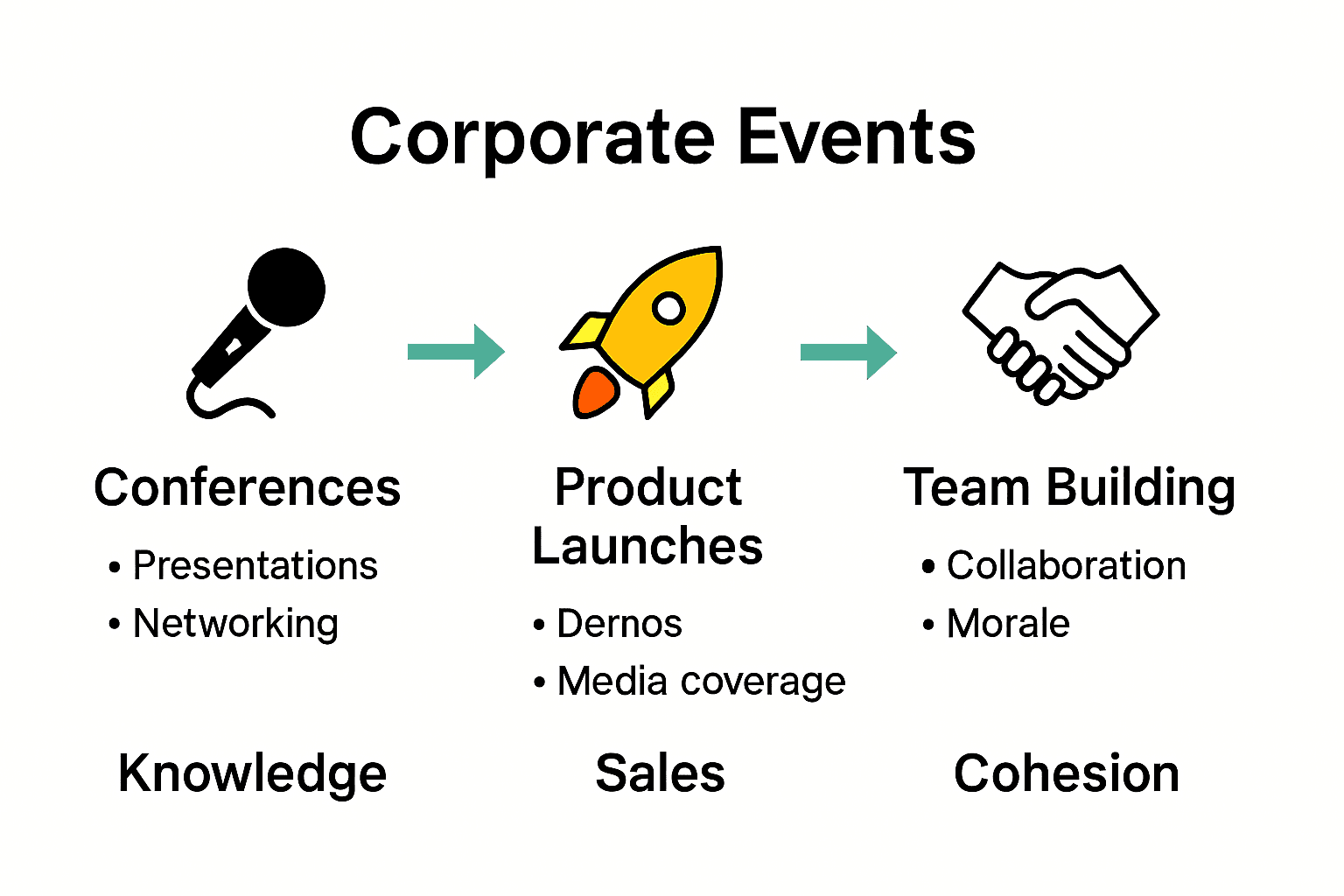
Corporate events represent a diverse ecosystem of strategic gatherings designed to achieve specific business objectives. Wikipedia categorizes these events under the comprehensive MICE framework — Meetings, Incentives, Conferences, and Exhibitions — each serving unique organizational purposes. These structured interactions go beyond simple gatherings, functioning as powerful tools for communication, engagement, and strategic advancement.
Professional conferences stand as cornerstone events where industry experts, thought leaders, and professionals converge to share knowledge, discuss emerging trends, and network. The Catalyst Companies highlights that these events are crucial for knowledge dissemination and professional development, offering platforms for learning and strategic connections.
The primary categories of corporate events include:
- Conferences and Seminars: Large-scale knowledge sharing platforms
- Product Launch Events: Introducing new offerings to stakeholders and media
- Team Building Activities: Enhancing internal collaboration and morale
- Incentive Programs: Recognizing and motivating employee performance
- Networking Receptions: Creating opportunities for professional interactions
- Training Workshops: Skill development and organizational learning
- Annual Stakeholder Meetings: Reporting organizational progress and strategy
Modern corporate events are increasingly sophisticated, blending physical and digital experiences to maximize engagement and accessibility. These events are no longer just logistical exercises but strategic instruments that reflect an organization’s culture, vision, and commitment to professional excellence. Successful event planning requires a nuanced understanding of audience expectations, technological capabilities, and clear communication objectives.
For a deeper look at how these formats translate into specific service offerings, see our business-events service and exclusive-events guides.
Key Elements of the Planning Process
Corporate event planning is a sophisticated, multi-layered process that demands meticulous attention to detail and strategic foresight. IMARC Group emphasizes that comprehensive planning involves critical components like budgeting, venue selection, and logistical management, with technological integration playing a pivotal role in creating seamless event experiences.
Strategic objective definition serves as the foundational element of the planning process. Event Guru Software highlights the importance of selecting appropriate event formats — whether in-person, virtual, or hybrid — that align precisely with organizational goals and attendee expectations. This strategic approach ensures that every aspect of the event is purposefully designed to deliver maximum impact.
Key elements of the corporate event planning process include:
- Objective Clarification: Defining clear, measurable event goals
- Audience Analysis: Understanding participant demographics and expectations
- Budget Development: Creating comprehensive financial frameworks
- Venue and Logistics Selection: Choosing appropriate locations and managing technical requirements
- Technology Integration: Implementing digital platforms for registration, engagement, and interaction
- Content and Program Design: Developing compelling agendas and speaker lineups
- Risk Management: Identifying and mitigating potential challenges
Successful event planning transcends mere logistics. It requires a holistic approach that combines creative vision, technological proficiency, and strategic thinking. Modern event planners must act as multidisciplinary professionals who can navigate complex organizational requirements while delivering memorable, impactful experiences that drive meaningful business outcomes.
For a related framing of these processes from the management angle, see our companion guide What Is Corporate Event Management? Complete Overview.
Essential Roles and Responsibilities Involved
Wikipedia describes corporate entertainment as a multifaceted discipline involving complex organizational responsibilities that extend far beyond simple event coordination. Corporate event professionals must navigate intricate professional landscapes, managing diverse stakeholder expectations while delivering strategic business experiences that align with organizational objectives.
Event management teams play a critical role in transforming conceptual event strategies into tangible experiences. IMARC Group emphasizes that these professionals are responsible for comprehensive oversight, including budgeting, vendor coordination, and ensuring rigorous compliance with safety regulations. Their multidimensional approach requires a sophisticated blend of creative thinking, technical expertise, and strategic problem-solving.
Key roles within corporate event planning include:
- Event Director: Overall strategic vision and executive decision-making
- Project Manager: Detailed coordination and timeline management
- Logistics Coordinator: Technical and operational implementation
- Creative Director: Design and aesthetic conceptualization
- Technical Specialist: Technology and digital platform integration
- Budget Analyst: Financial planning and expense management
- Compliance Officer: Regulatory and safety protocol adherence
- Client Relations Manager: Stakeholder communication and expectation management
Modern event planning demands professionals who can seamlessly integrate technological sophistication with human-centric design. These roles are no longer siloed but interconnected ecosystems requiring collaborative intelligence, adaptive skills, and a deep understanding of organizational communication dynamics. Success hinges on the ability to transform complex logistical challenges into compelling, memorable experiences that drive meaningful business outcomes.
Critical Success Factors and Common Pitfalls
Corporate event planning represents a complex ecosystem where strategic precision determines success or failure. EventCombo underscores that critical success factors extend beyond traditional event management, emphasizing technological integration, inclusivity, and sustainable practices as fundamental pillars of contemporary event design.
Strategic adaptability emerges as a paramount consideration in navigating potential challenges. Event Guru Software highlights the importance of balancing in-person and virtual engagement models, recognizing that modern events must accommodate diverse attendee preferences and technological expectations. This nuanced approach requires continuous innovation and flexible strategic frameworks.
Critical success factors include:
- Clear Objective Definition: Establishing measurable event goals
- Technological Integration: Leveraging digital platforms for enhanced engagement
- Audience-Centric Design: Creating experiences tailored to participant needs
- Comprehensive Risk Management: Developing robust contingency plans
- Inclusive Communication: Ensuring accessibility across diverse participant groups
- Sustainable Event Practices: Minimizing environmental impact
- Continuous Feedback Mechanisms: Implementing real-time assessment strategies
Common pitfalls that organizations must proactively address involve inadequate planning, communication breakdowns, and failure to anticipate dynamic participant expectations. Successful event planners differentiate themselves by maintaining extraordinary attention to detail, cultivating adaptive problem-solving skills, and approaching each event as a unique strategic opportunity for organizational communication and engagement.
Elevate Your Corporate Events with Expert Planning and Innovation
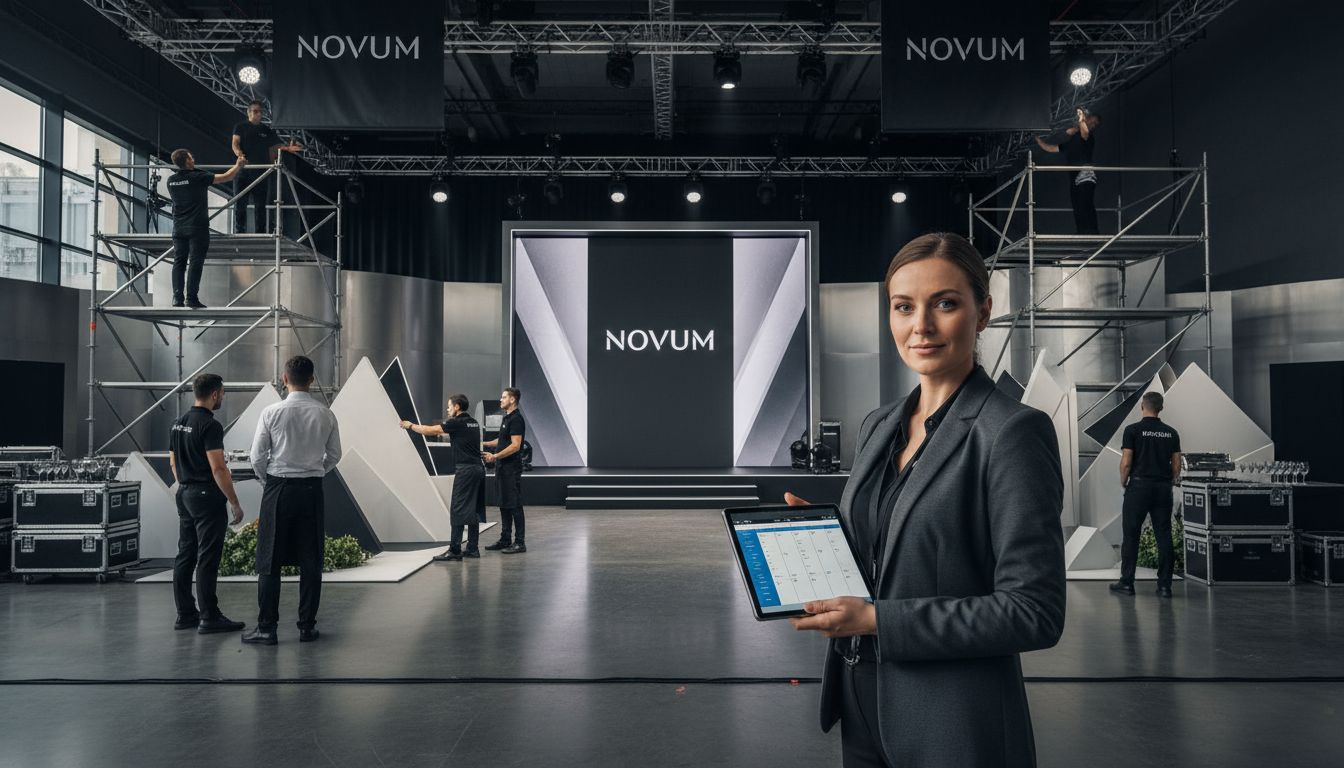
Modern corporate event planning demands strategic vision, flawless execution, and seamless integration of technology to create memorable and impactful experiences. If you’re facing challenges like aligning event objectives with business goals or managing hybrid attendee engagement, you are not alone. Achieving clear objectives, embracing technological innovation, and ensuring audience-centric design are essential elements that can transform your gatherings from routine to remarkable.
At Uproduction, we specialize in delivering tailored corporate events and international conferences that combine creativity, high quality, and cutting-edge solutions. Our expertise spans business events, pleasure travel and incentive programs, exclusive events, and culinary events — ensuring your event resonates with both your brand and your audience.
Ready to turn complex event logistics into a seamless experience that fosters engagement, motivation, and meaningful connections? Contact us and let’s start planning your next event together.
Frequently Asked Questions
What is corporate event planning?
Corporate event planning is the process of organizing and coordinating events for businesses, designed to achieve specific objectives such as brand communication, audience engagement, and professional development.
What are the major types of corporate events?
The major types of corporate events include conferences, product launches, team-building activities, incentive programs, networking receptions, training workshops, and annual stakeholder meetings.
What are the key elements involved in the corporate event planning process?
Key elements of corporate event planning include defining objectives, analyzing the audience, developing a budget, selecting venues, integrating technology, designing content, and managing risks.
What roles are involved in corporate event planning?
Key roles in corporate event planning include the event director, project manager, logistics coordinator, creative director, technical specialist, budget analyst, compliance officer, and client relations manager.