
Nearly every american business leader recognizes that impactful events can shape brand reputation and foster lasting connections. With over 60 percent of organizations investing heavily in professional event hospitality, the stakes for memorable experiences have never been higher. Understanding the purpose and strategy behind event hospitality unlocks new ways for companies to engage, impress, and achieve core objectives with clarity and expertise.
Table of Contents
- Defining Event Hospitality And Its Purpose
- Types Of Event Hospitality Services Offered
- Key Features Of Professional Event Hospitality
- Role In Corporate And International Events
- Risks, Costs, And Critical Considerations
Key Takeaways
| Point | Details |
|---|---|
| Comprehensive Strategy | Event hospitality requires strategic planning, coordination, and execution to create impactful experiences aligned with organizational goals. |
| Audience Engagement | Successful events prioritize audience-centered design to foster meaningful interactions and drive engagement. |
| Risk Management | Thorough financial and operational risk management is essential for navigating complexities in event execution and ensuring long-term success. |
| Technological Integration | Advanced event hospitality leverages technology to enhance experiences, streamline logistics, and facilitate communication among diverse audiences. |
Defining Event Hospitality and Its Purpose
Event hospitality represents a sophisticated strategic approach to crafting memorable professional gatherings that transcend traditional event management. According to hospitality.institute, event management in the hospitality industry involves “strategic planning, coordination, and execution of gatherings that create memorable experiences while achieving specific business objectives.”
At its core, event hospitality encompasses a comprehensive business function designed to design experiences that align perfectly with organizational goals and brand identity. OpenWA highlights that events can span diverse categories including social, corporate, government, philanthropic, community, and sporting events – each serving unique purposes and targeting specific audiences.
The primary purpose of event hospitality goes beyond mere logistics. It focuses on creating immersive, meaningful interactions that foster connection, drive engagement, and deliver tangible outcomes for participants. This approach requires meticulous attention to detail, understanding of audience expectations, and the ability to curate experiences that resonate on both emotional and professional levels.
Key components of effective event hospitality include:
- Precise strategic planning
- Audience-centered experience design
- Seamless logistical coordination
- Brand-aligned interaction management
- Measurable experience outcomes
By integrating these elements, organizations can transform standard events into powerful platforms for communication, relationship building, and strategic goal achievement.
Types of Event Hospitality Services Offered
Event hospitality services encompass a comprehensive range of professional offerings designed to create seamless, engaging experiences across various organizational contexts. Exeter University highlights that the hospitality industry provides diverse services spanning accommodation, food and beverage, and specialized event management domains.
Professional conference organization represents a critical subset of event hospitality services. According to Wikipedia, professional conference organizers specialize in comprehensive event management, including critical components such as:
- Conference design
- Program development
- Registration management
- Venue and site selection
- Audiovisual coordination
- Logistical planning
- Marketing strategy
- Financial management
Beyond conference management, event hospitality services extend to multiple specialized domains. These include corporate event planning, brand activation experiences, team-building retreats, international conference management, incentive travel programs, and executive networking events. Each service type requires unique expertise, strategic planning, and a nuanced understanding of client objectives.
The most sophisticated event hospitality services go beyond logistical execution. They integrate deep strategic insights, cultural intelligence, technological innovation, and personalized experience design to transform standard gatherings into powerful platforms for communication, learning, and organizational growth. By combining technical precision with creative vision, these services help businesses and organizations craft memorable, impactful events that drive meaningful engagement and achieve strategic goals.

Learn more about hospitality in corporate events to understand how these specialized services can elevate your organizational gatherings.
Key Features of Professional Event Hospitality
Professional event hospitality is distinguished by its comprehensive, strategic approach to creating exceptional experiences. Hospitality Institute emphasizes that true event hospitality goes beyond basic logistics, involving a deep understanding of client needs and the ability to translate those requirements into meticulously crafted event plans.
Strategic customization stands as a cornerstone of professional event hospitality. The key features encompass multiple critical dimensions:
- Personalized experience design
- Adaptive problem-solving
- Comprehensive service management
- Advanced technological integration
- Cultural intelligence and sensitivity
- Seamless operational execution
According to Wikipedia, professional event hospitality services typically include comprehensive management across critical domains such as conference design, program development, registration processes, venue selection, audiovisual coordination, logistics, marketing strategies, and financial management. This holistic approach ensures that every aspect of an event is carefully orchestrated to meet and exceed client expectations.
The most sophisticated event hospitality providers distinguish themselves through their ability to anticipate needs, manage complexity, and deliver transformative experiences.
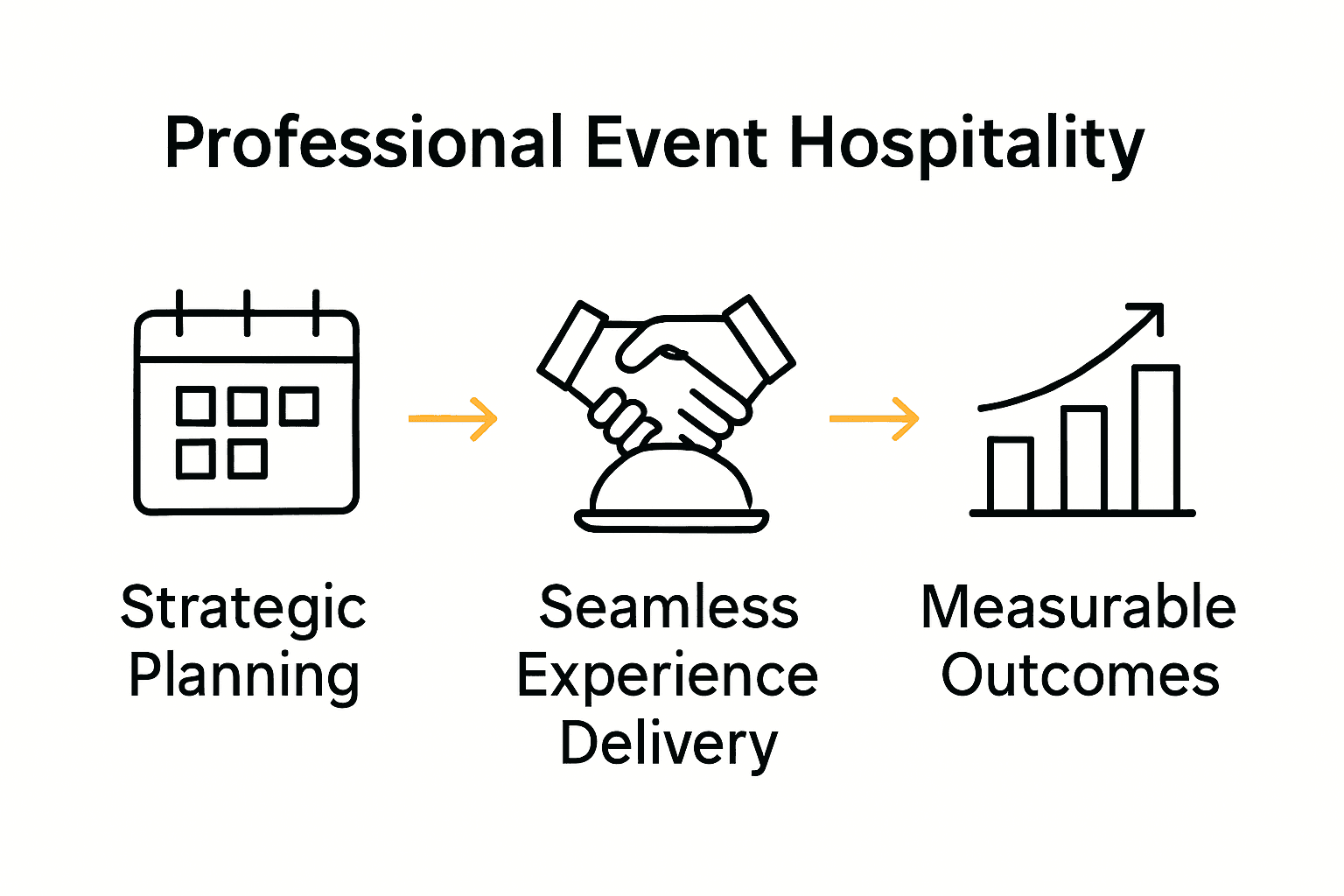 They combine technical expertise with creative vision, understanding that each event represents a unique opportunity to create meaningful connections, drive organizational objectives, and craft memorable moments that resonate long after the event concludes.
Learn more about creating impressive event experiences to understand the nuanced art of professional event hospitality.
Role in Corporate and International Events
Event hospitality plays a transformative role in corporate and international settings, serving as a critical strategic tool for organizations seeking to enhance their brand presence and communication effectiveness. Hospitality Institute highlights that event management represents more than logistical coordination – it is a powerful revenue stream and brand-building mechanism that significantly contributes to an organization’s market positioning and reputation.
Strategic event management in corporate and international contexts involves multiple sophisticated dimensions:
- Global audience engagement
- Cross-cultural communication strategies
- Brand narrative development
- Networking opportunity creation
- Complex logistics coordination
- Precision-driven experience design
According to Wikipedia, professional conference organizers function as critical consultants for academic and professional associations, providing comprehensive service management that encompasses program development, registration processes, venue selection, and intricate financial management. These services are particularly crucial in international events where cultural nuance, technological infrastructure, and logistical complexity demand exceptional expertise.
The most advanced event hospitality providers understand that corporate and international events are not merely gatherings, but strategic platforms for knowledge exchange, relationship building, and organizational storytelling. They leverage technological innovations, deep cultural intelligence, and meticulous planning to transform standard conferences into immersive experiences that drive meaningful connections, facilitate global business objectives, and create lasting impressions.
Explore our complete guide to corporate event management to understand how professional event hospitality can elevate your organizational communication and engagement strategies.
Risks, Costs, and Critical Considerations
Event hospitality involves a complex landscape of financial, operational, and strategic risks that demand sophisticated management and proactive planning. Hospitality Institute emphasizes that successful event management requires strategic planning to mitigate risks, control costs, and ensure overall profitability by understanding client needs and translating them into actionable, personalized service strategies.
Financial risk management represents a critical dimension of event hospitality, encompassing multiple strategic considerations:
- Precise budget forecasting
- Contingency fund allocation
- Vendor contract negotiation
- Comprehensive insurance coverage
- Technology and infrastructure investment
- Potential revenue protection mechanisms
According to Wikipedia, professional conference organizers play a pivotal role in comprehensive financial management, providing critical services that include detailed budget control, risk assessment, and strategic financial planning. These services are essential for navigating the complex economic landscape of professional events, where unexpected challenges can quickly escalate costs and compromise event success.
Beyond financial considerations, sophisticated event hospitality providers must also address nuanced risks including technological failures, logistical disruptions, communication breakdowns, and potential reputational challenges. The most advanced providers develop multilayered risk mitigation strategies that combine predictive analytics, flexible planning frameworks, robust communication protocols, and adaptive problem-solving techniques to ensure seamless event execution under diverse and unpredictable circumstances.
Learn more about effective event management strategies to understand how professional event hospitality can transform potential risks into strategic opportunities.
Elevate Your Event Hospitality Experience with Expert Solutions
The challenges of crafting immersive event hospitality experiences call for strategic planning, flawless execution, and creative vision. Your goal is to move beyond basic logistics and deliver meaningful connections that resonate emotionally and professionally. Whether you face complexities in global audience engagement, cross-cultural communication, or managing intricate logistics, UPE specializes in transforming these challenges into memorable and impactful events tailored precisely to your brand and objectives.
Partnering with UPE means accessing:
- Personalized event designs that reflect your unique goals
- Seamless coordination of professional conferences and corporate gatherings
- Innovative approaches that combine creativity with operational precision
Discover how our extensive expertise in international events and incentive travel can turn your next professional gathering into a powerful platform for engagement and growth. Visit UPE to explore detailed event solutions and success stories.
Take your event hospitality to the next level with our proven approach
Ready to create events that leave a lasting impression and drive real results Visit UPE today and start planning your next exceptional corporate or international event with trusted experts by your side. Learn more about elevating your conference and event management by exploring our guide at Complete Corporate Event Management Guide and dive deeper into How to Create Event Experiences that captivate and connect.
Frequently Asked Questions
What is event hospitality?
Event hospitality is a strategic approach that focuses on creating memorable experiences during professional gatherings, aligning with organizational goals and brand identity.
What types of services are included in professional event hospitality?
Professional event hospitality services include conference organization, program development, venue selection, registration management, logistical planning, and marketing strategy among others.
How does event hospitality benefit corporate events?
Event hospitality enhances corporate events by improving brand presence, facilitating networking opportunities, and creating immersive experiences that drive engagement and strategic goals.
What are the key features of effective event hospitality?
Key features of effective event hospitality include personalized experience design, seamless logistical coordination, advanced technological integration, and comprehensive service management.
Recommended
- Complete Guide to Hospitality in Corporate Events – Uproduction
- Role of Event Management in Business: Complete Guide – Uproduction
- Why Use Event Management Companies: Complete Guide – Uproduction
- What Is Event Branding? Complete Expert Overview – Uproduction
- What Is Event Security? Complete UK Guide | Brainiac Media
- 7 Key Benefits of Luxury Transportation for Special Events – Ashe County Livery blog
